Wednesday, 6 March 2013

Assignment 2 Task 3

Assignment 2 Task 3

Barriers of communication

A barrier of communication is something that hinders or prevents a person’s ability to communicate to another person.

General Communication Skills:

Tone of Voice – When communicating with people the tone of voice that is used when doing so is important as just about everyone is capable of noticing what mood that the person who is speaking is in as well as when it is changing based solely on the tone used. While a lot of these can cause a listener to be cautious of their choice of words and gestures, listening to someone speak in a deadpan monotonous voice can cause listeners to be discomforted.

A way to prevent this from interfering is to make sure that you speak in a clear voice and try not to get annoyed at people in the audience. Another way is to avoid raising your voice when speaking as it may cause people to think that you are taking out frustration on them.

Lack of Concentration – When communicating with a person or a group of people it can be guaranteed that they did not listen to some of what was communicated. One of the reasons for this is because of a lack of concentration at some point on the listener’s part although it can sometimes on the speakers part as well. This can be caused by the speaker being dull or not engaging the listeners enough to keep them interested for long.

One of the best ways to make sure that the people you are communicating with does not lose concentration is to make sure that you are engaging the audience by asking them question and other things to keep them concentrating on you.

Interpersonal Skill:

Background Noise – When speaking to someone it can become a lot more difficult if the person in question is having difficulty hearing them due something making noise in the background distracting them or making communicating impossible at all. The background noise can cause a person to turn around to look for the source of the noise, find it harder to concentrate or being unable to actually hear what they are saying due to it being drowned out by noise.

To prevent this it may be best to make sure that the source of the noise is blocked off, such as closing doors or windows to keep it out. Another way to stop it is to make sure that there is no noise happening when you are taking.

Body Language – When communicating with some the body language that they use is quite important as it can help deliver a message, sometimes even better than normal speaking. Some care should be taken when using body language as some of the signs, gestures and movements that are used will mean different thing to people from different cultures and countries so some people may be insulted by it and others may find it racist. Despite this body language is helpful for helping you get your point across when used for emphasis.

To prevent this from interfering with communicating then try to limit your gestures to ones that mean the same or similar to it in any culture.

Written Communication:

Spelling and Grammar – When using writing as a form of communication spelling and grammar is probably the most important thing about it. If a person fails to use proper spelling and grammar then the people receiving the messages with most likely not are able to understand what they are meant to be receiving. Also sometimes there are words and phrases that have a completely different meaning when they are spelt incorrectly.

This can be prevented by rereading through the message when you are done writing it in order to find any mistakes or if there is a part of the message that seems to be out of place or sound strange.

Language used – When writing in order to communicate you have to take into consideration that the other person may not be able to completely understand you if you use words or phrases that they are not familiar with. An old person, for example, won’t be able to understand modern slang but can understand older versions of them. Another more obvious one is that people from different countries will have a hard time understanding something that is not in their language.

One way this can be prevented is by thinking about which the person that you are communicating with and then change the way that you write in order to match that person’s more recognized style of writing.

Thursday, 14 February 2013

Task 2

Assignment 2

Include an explanation of the principles of effective communication.

Definition of effective communication

“A two way information sharing process which involves one party sending a message that is easily understood by the receiving party. Effective communication by business managers facilitates information sharing between company employees and can substantially contribute to its commercial success.” (businessdictionary.com)

Electronic book page 15 – 18

The Communication Process
The 6 steps of the Communication Process

The six steps are important for communication with the first one being message which is the information you want to send and encoding which is how you are going to send it. Sending is how you actually send it through speech, body language, text etc. Decoding is how the other side will read the message in order to understand it and Interpret is how they understand it but not always how you want them to which is why there is the final step of feedback to see if the receiver has understood the sender completely.

General Communication Skills
Communication processes need an audience to communicate the message to. The success of the message will be determined by:

Cultural differences e.g. Christian V Arab – when communicating with people you have to take into account for any differences between you and the audience as some words or gestures that seem meaningless to you, other people from different cultures may find these insulting or stupid.

Adapting to suit an audience – one of the most important parts of communications is adapting to the people that are around you when you are communicating. One example would be that children are less likely to understand if you only speak using big words and terms that older people understand and adults would understand if you speak using words or terms that were made for children.

Interpersonal Communication Skills
If people are going to try to communicate the at least two people will need to take part. One person will use different methods to try to convey a message to the others while they use different methods to try and understand the message.

Negative language – this type of language can have a bad affect when communicating such as making the person delivering the message believe that they are being dull and not very interesting and can have a bad affect on them, but sometimes it can be used to help get your point across.

Active Engagement – this way of communicating normally starts when communicating one person speaks and the other listens while given some sign that he is paying attention, such as nods or facial expressions. This can also be invoked by ending your part of speaking with something similar to “what do you think” and “your opinion would be”.

Written Communication Skills

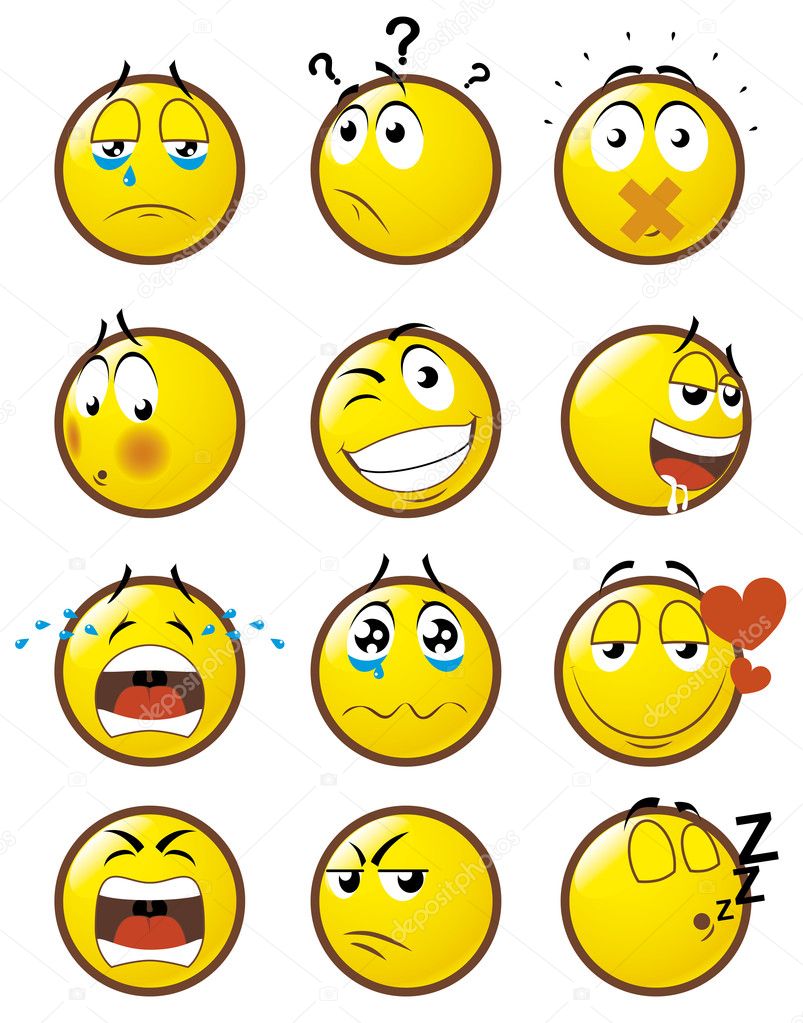
Smileys or Emoticons – Emoticons are small pictures that are used on places such as social networking sites to express emotions, true to their name as well as make conversations lighter. This is not a good thing to use if the conversation is a serious one such as a business meeting and other things along those lines.

Grammar and Spelling – This is extremely important during written communication as it is the main way of actually communicating with. It is very important to check your own work when you finish a written speech in order to find spelling mistakes. The reason for this is because there are some words that have a similar spelling but mean different thing, and vice versa. This can make some occasions of communicating very confusing.

Bibliography
Books:
Anderson et al “Information Technology Level 3 Book 1 Btec National” Pearson 2010


Websites:

Monday, 11 February 2013

Task 1

Assignment 2

1.    Employee Attributes
Definition
Page 4 -11 specific and soft skills

Employee attributes are the skills that an employee can have in order to keep the job that they have

Two examples of employee attributes that may be required from the Rainbow FULL TIME staff –1 specific to the job and 1 general (soft skill)

The important point to remember is that you must explain WHY the attributes are valued.

Specific attributes – Specific attributes are different when compared to general attributes in that they are attributes that are used for that job only and they can be separated into two categories: Job –related attributes that are need to actually do the job and good working procedures which employees are expected to follow.

Job-related attributes – These are attributes that the employer expects an employee to have. All jobs have some area where technical knowledge and skills may be necessary with examples of such being a sales representative would need to be able to drive on a clean license and have your own means of transport. There are other things that they may have is that someone in a technical field would need to bring things such as screwdrivers as well as being skilled with using different types of testing equipment such as mulitmeters.

General attributes – General attributes, sometimes called soft skills, are skills that while unnecessary they are highly recommended by employers as something that they would like employees to have although they are expected to have these skills to some extent. Employers will usually look for people with planning, organizational, time management, team working, verbal and written communication skills, numeracy as well as other skills such as creativity.

Planning skills – This skill is wanted by employers so that you would be able to plan ahead and set up different objectives in order to achieve that goal.

Organizational skills – People who have this skill are wanted by employers because as this allows them to make sure that they have everything in order so that they can have all of their work in on time and can find information easily.

Time Management – This skill is helpful as it allows for employees to make sure that the work that they are doing their work inside the right time frame as well making sure that they will have their work in on time.

Verbal and Written Communication – This skill is less hope to have and more need to have when it comes to choosing employees as they would require this in order to work with fellow employees as well as customers.

Team Working – This has some similarities to Communications as it is required in order for the employees to work with each to make sure that they can finish their work to the best that they can.

Numeracy – This is used a lot in the work place so employees are needed to have some skill in this area so that they can use this skill if they ever need to use it such as making a spread sheet of their stock for example.

Two examples of employee attributes that may be required from the Rainbow FULL TIME staff –1 specific to the job and 1 general (soft skill)

The important point to remember is that you must explain WHY the attributes are valued.
1 specific to job
Qualification
Cut and paste qualifications section from ICT job

·         A level 4 qualification on the National Qualifications Framework e.g HNC/D or above in ICT or in an ICT related area.

·         Minimum of 5 GCSE passes at Grade C or above including English or Keyskill’s Level 2 in Communication  or equivalent qualification e.g. GNVQ Intermediate/BTEC First Award/NVQ Level 2 together with GCSE English at Grade C or above or Keyskill’s Level 2 in Communication.

Having these qualifications are necessary in order to prove that you know how to use a computer properly as well as showing that you can effectively use one for your work and other things if needed.

General skill

·         An ability to work under pressure and to prioritise a complex and varied workload to the required standard and within tight deadlines.
·         Organisational skills with the ability to work without supervision and on own initiative.
These general skills would be needed in order to show that you are a hard working employee who is capable of working on his own very well.

2.    Employee Attitudes
Definition -

Two examples of personal attitudes that might be expected of a Rainbow Volunteer.

Explain WHY the attitudes are valued.

Attitudes are valued by employers because people of different ages, cultures, religions etc. will have different attitude for work and will go about it in different ways and these attitudes will change

Two examples of a personal attitude and why they are needed to do this job:

Creativity – All companies think that having creativity is an important thing to have as it will allow for employees to think outside the box as well as figure things out on their own instead of needed to constantly ask for help. Attitudes can also affect things like peer pressure, were other people such as coworkers affect it through speech and clothes can affect them, and through interaction with people of different age groups.

Independence – Every company around always hope that their employees and potential employees can show some form independence such as not needing to get their supervisors or employers to constantly tell about what they need done and hope that if they finish everything that they need done they can look for something else to do or go through the work they just did to check form mistakes.